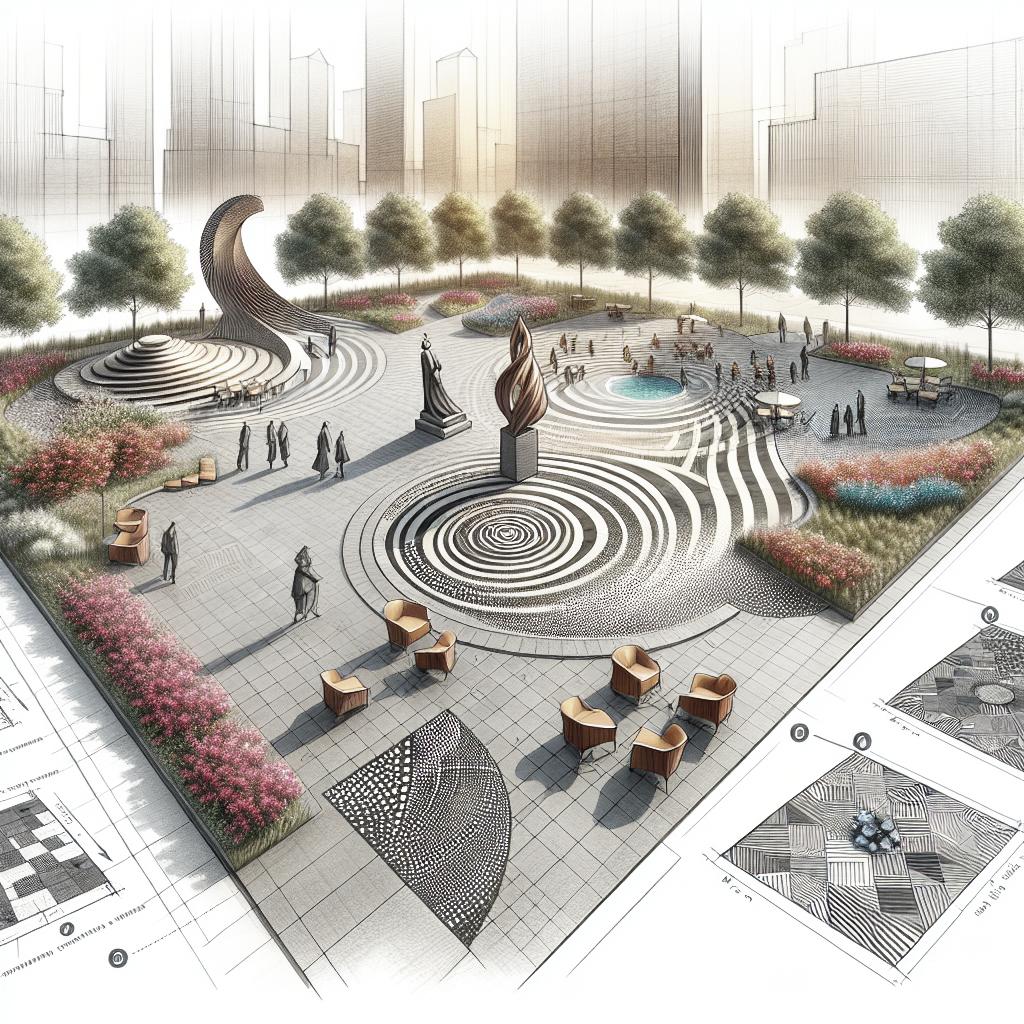
### The Art of Designing Focal Points in Open Spaces The power of open spaces lies in their ability to bring people together, fostering community, culture, and connection. Across the world, urban designers and city planners have developed specific focal point strategies to enliven cities’ open areas. These strategies are exemplified by historical and contemporary examples such as the iconic piazzas of Rome, vibrant public squares in Vienna and Seville, and innovative urban spaces in cities like New York and Detroit. By understanding how these places function and draw people to them, we can appreciate the vitality that well-designed focal points bring to urban landscapes. This blog post delves into various cities and their notable open spaces, offering insights into how focal points create lively gathering places. With examples ranging from classic European cities to modern American metropolises, we explore the critical elements that make these spaces work. We also discuss ongoing projects and what they teach us about creating the cities of tomorrow. ## Piazzas in Rome ### Focal points provide the gathering places that make piazzas, squares, public buildings, and streets come to life Focal points in urban design are instrumental as they serve as anchors that draw people in and encourage social interaction. In many cities, especially in Europe, these focal points are intricately designed as central features like fountains, statues, or historical buildings. They not only enhance the aesthetic appeal of a space but also contribute to its functionality by acting as a communal hub where people congregate, engage, and participate in city life. In the grand piazzas of Rome, focal points have been perfected over centuries to create dynamic spaces that blend history, culture, and modernity seamlessly. Renowned for their beauty and functionality, Roman piazzas lay a foundation for the urban experience, where public life thrives around central elements. Whether through a sculptural masterpiece or a strategic arrangement of benches and greens, these piazzas show how focal points can transform a mere open space into a bustling node of activity and engagement. ### Piazza Popolo Piazza del Popolo, one of the most famous public spaces in Rome, epitomizes how focal points can define an area’s identity. Known for its Egyptian obelisk, the piazza reflects a millennia-old tradition where architecture and art serve as focal points that influence human behavior. The piazza’s wide-open spaces, paired with strategically placed fountains and the Santa Maria del Popolo church, creates a balanced environment that encourages locals and tourists alike to linger and absorb the ambiance. Its intersection of streets, known as the Tridente, stretches towards key cultural attractions, drawing visitors through a well-thought-out flow of movement. This strategic layout demonstrates the effectiveness of focal points in creating pathways and narratives throughout the city, turning Piazza del Popolo into a true center of Roman public life. ### Piazza di Spagna with the Spanish Steps Piazza di Spagna, with its magnificent Spanish Steps, serves as a quintessential example of how architecture interacts with open space to create a compelling focal point. The steps, climbing towards the Trinità dei Monti church and flanked by vibrant floral arrangements, create a natural gathering place, encouraging both repose and activity. This iconic setting attracts visitors from around the world, who come to relax, people-watch, and take part in its lively atmosphere. Moreover, the steps serve as a physical and visual bridge, connecting the lower Piazza di Spagna with the upper heights of Rome. The coordinated effort of blending vertical and horizontal spaces enhances the city’s architectural narrative, showcasing the pivotal role focal points play in linking diverse urban elements. ### Trevi Fountain The Trevi Fountain is not merely a masterpiece of baroque art but also a magnet that draws both Romans and visitors from across the globe. Situated in a modestly-sized piazza, this fountain acts as an unparalleled focal point thanks to its monumental scale and intricate detail, depicting Neptune’s chariot led by Tritons. Its meaningful legend—tossing a coin into the fountain to ensure a return to Rome—adds a layer of social engagement and tradition, making it a focal point enriched by interaction and myth. The Trevi Fountain’s strategic placement within the city’s layout funnels tourists into its vicinity, despite the relatively tight urban fabric surrounding it. Its capacity to draw crowds reinforces the importance of understanding scale and context in designing effective focal points that captivate continuously. ### Piazza Della Rotonda Piazza della Rotonda hosts the awe-inspiring Pantheon, a historical and architectural marvel that demonstrated the Romans’ engineering prowess. Serving as the piazza’s focal point, the Pantheon effortlessly attracts throngs of visitors, its grand portico and vast dome captivating the imagination. Flanked by cafes and street musicians, the piazza thrives as both a cultural and social hub. This intersection of daily life and historic significance underscores the value of strategic focal points in urban settings, where a landmark not only showcases the grandeur of the past but also provides a lively, engaging space for present-day interactions. ### Piazza Navona Piazza Navona stands out as one of Rome’s most beloved and energetic squares due to its incorporation of multiple fountains as focal points. Enclosed in an oval shape tracing the outline of a former stadium, Piazza Navona’s design captures the city’s layered history. The Fountain of the Four Rivers, in the center, is a masterpiece of Gian Lorenzo Bernini and serves as the square’s primary focal point, attracting people to view its complex form representing river gods. On either end of the square lie two more fountains, all set amidst an array of restaurants and artists. The resultant atmosphere is one of vibrant interaction where the interplay of art, commerce, and public life is mediated through expertly placed focal points, proving essential in maintaining Piazza Navona’s status as a must-visit urban destination. ### Valencia, Spain In Valencia, the influence of historical Roman urban planning is evident in its public spaces, yet with a distinctly Spanish twist. Focal points here often combine modern art with historical sensibilities, creating spaces that not only reflect the city’s cultural identity but also encourage interaction and exploration. The City of Arts and Sciences, a modern architectural marvel, serves as a focal ensemble that guides the cityscape’s evolution. Such spaces exemplify how focal point strategies can meld old traditions with contemporary design, ensuring that open spaces invigorate community spirit and provide room for a multi-faceted urban life. Their design reflects Valencia’s commitment to sustainability and innovation in creating inclusive community areas that inspire the city’s future growth. ## Vienna In Vienna, grand boulevards converge into magnificent squares, each with carefully crafted focal points that symbolize the city’s rich cultural heritage. The Maria-Theresien-Platz is a notable square anchored by two impressive museums, Museo Naturhistorisches and Kunsthistorisches. These iconic structures serve as focal points, not only attracting art and history enthusiasts but also lending the public space an air of intellectual vibrancy and architectural grandeur. Elsewhere, the Stephansplatz, housing the awe-inspiring St. Stephen’s Cathedral, shines as another focal point example. Its towering spire serves as a visual beacon visible from afar, guiding urban flow and framing important vistas. The square surrounding the cathedral is alive with shoppers, tourists, and locals, reflecting how focal points situated in historical and commercial intersections can delight and engage a diverse audience while facilitating cultural and social dialogue. ## London London’s Trafalgar Square stands out as a robust example of an urban focal point, defined by its central monument, fountains, and the National Gallery’s iconic façade. The square not only serves as a space for national celebrations and protests but functions as a hub for tourists and Londoners alike. Nelson’s Column stands as an indomitable marker of the city’s history, while the surrounding modern cityscape ensures the square remains a current and relevant public venue. Additionally, London’s newer spaces, such as the regenerated King’s Cross with its Granary Square, have become focal points for regeneration, blending cultural programming with urban design. Here, interactive water features and open seating invite people to linger, turning a once-industrial area into an innovative nucleus of cultural activity and urban life. ## Copenhagen Copenhagen is globally renowned for its commitment to sustainable urban design, where open spaces employ focal points harmonizing with nature. The city’s design philosophy embraces human scale and movement, showcased in public plazas like Gammeltorv and Nytorv. These adjacent squares are celebrated for their historically rich architecture and fountains, integrating naturally with the city’s bicycle and pedestrian thoroughfares. Moreover, Ørestad, a modern district with a focus on ecological awareness, utilizes contemporary art installations and carefully planned greenbelts as focal points. These spaces engage the community, improve quality of life, and reflect Copenhagen’s ethos of fostering greener, more liveable urban environments, thus establishing the city as a leader in socially and ecologically thoughtful urban planning. ## Stockholm Stockholm’s approach to open spaces leverages its stunning natural geography and architectural heritage to create effective focal points. The city’s central square, Sergels Torg, features the Kristallvertikalaccent, a striking 37-meter glass column that attracts visitors. It’s designed to complement the flow of public transport hubs, enhancing the square’s role as a dynamic urban junction. On the island of Djurgården, the Vasa Museum acts as a pivotal focal point. This maritime museum, surrounded by lush parkland, not only draws history enthusiasts but also fosters a reflective and leisurely atmosphere that contrasts beautifully with the city’s more bustling districts. Such focal points help Stockholm maintain its reputation as “the Venice of the North,” where nature and urban life coexist harmoniously. ## Seville ### Plaza del Triunfo In Seville, the Plaza del Triunfo serves as a testament to the city’s vibrant mix of Moorish, Gothic, and Renaissance elements. It sits adjacent to major landmarks like the Seville Cathedral and the Alcázar palace, creating a focal point revered by locals and tourists. The plaza’s shaded benches and central fountain provide respite in the warm climate, encouraging relaxation amid the city’s breathtaking historical scenery. The intricate interplay of Seville’s architectural heritage and the design of focal points like Plaza del Triunfo enrich the sense of place and connectivity among the city’s residents and visitors, underlining the role of historical context in vibrant urban design. ### Plaza Virgen de los Reyes Another significant space, Plaza Virgen de los Reyes, captures the heart of Seville with its central position flanked by the Giralda tower of the cathedral. This square is one of the city’s liveliest spots, where convergent paths bring a constant flow of people making their way through one of Seville’s most stunning settings. The square’s layout naturally emphasizes communal engagement, where historical charm meets everyday activity in perfect harmony. This juxtaposition exemplifies how focal points can activate an area, boosting its cultural resonance and its function as a linchpin for various modes of city life. The connection between design strategy and historical legacy remains clear, with each architectural element contributing to a cohesive and engaging urban fabric. ## Detroit Campus Martius Campus Martius Park in Detroit showcases successful urban renewal rooted in strategic focal point design. Once a neglected part of the city, the park now serves as a vibrant focal point that has redefined the area with green spaces, outdoor cafes, and cultural events. Central to the park is the Woodward Fountain, a feature that inspires movement and gathering while enhancing the aesthetic appeal. The transformation achieved at Campus Martius illustrates the power of focal points in urban revitalization. By creating attractive and functional spaces, cities can generate economic growth, foster community, and improve quality of life, demonstrating an exemplary model for urban redevelopment in American cities. ## Santa Monica, California Santa Monica, known for its oceanfront beauty, blends leisure and lifestyle through well-planned open spaces. The Santa Monica Pier acts as a prominent focal point featuring an iconic Ferris wheel, Instilling a spirit of fun and adventure. The nearby Third Street Promenade, known for its lively street performers and shopping, serves as another focal point where the beach culture of Santa Monica unfolds. These vibrant, interactive spaces highlight the effectiveness of focal points in integrating commercial activity with recreational charm. Santa Monica’s approach reveals how well-designed urban elements can encapsulate a city’s identity, drawing locals and visitors to partake in the diverse experiences it offers. ## New York City In New York City, Central Park can be considered the ultimate green focal point. Its sprawling landscapes, lakes, and curated attractions provide respite from the city’s hustle, drawing people from across urban and surrounding suburban areas. Landmarks like Bethesda Terrace serve as focal gathering points within the park, orchestrating connections among diverse communities. Times Square, a contrasting yet complementary focal point, embodies the energy of New York. It’s a hub for entertainment, commercial vibrancy, and cultural diversity—a space where focal points create a sense of place that is both chaotic and compelling, illustrating how versatile design strategies can suit a city’s multifaceted character. ## Paris Parisian squares such as Place de la Concorde and Place des Vosges reflect the elegance and cultural pervasiveness of focal point design. At Place de la Concorde, the Luxor Obelisk stands as a historic focal point, enhancing the square’s grandeur and historical narrative alongside stunning views of the Champs-Élysées. Despite the vast historical backdrop, Parisian innovation in focal point strategy continues with newer areas like La Défense’s Grand Arche, representing modern architectural ambition. While providing essential navigational and aesthetic roles, these focal points reinforce Paris’ identity as a city where innovation is treasured alongside cultural heritage, forming enduring bonds between past achievements and future aspirations. ## Works in Progress Emerging urban projects worldwide continue innovating ideas around focal points. Contemporary designers often emphasize multi-use spaces that adapt to community needs and environmental challenges. Projects in global cities highlight the futuristic approach to creating spaces that encapsulate sustainability, interactivity, and inclusiveness. These ongoing efforts represent the future frontiers of open space design. By employing cutting-edge technology, architects and planners can create living focal points that respond to dynamic urban needs, reflecting a commitment to ongoing improvement and the constant reinvention essential for thriving cities. ## Brooklyn In Brooklyn, the transformation of industrial areas into vibrant communities involves strategic focal points creating shared spaces. Brooklyn Bridge Park exemplifies this through thoughtful design that incorporates access to waterfronts and green recreational zones. Spaces like the Dumbo waterfront combine historic charm and modernity, making them potent urban focal points that foster a sense of place and community. As Brooklyn continues its evolution from its storied industrial roots to a contemporary cultural live wire, the role of focal points in guiding its urban trajectory remains seminal. This synergy between form, function, and heritage anchors its journey towards a sustainable and community-focused future. ## San Diego San Diego’s Balboa Park represents a cornerstone of open space design, where cultural institutions are focal points within a lush urban park. The park’s carousel, architecture, and various museums create a culturally enriching focal network that celebrates diversity and creativity, leading to enhanced civic engagement. This blueprint, focused on integrating content-rich focal points into natural settings, underscores the success of places that do not merely provide recreational space, but also promote cultural discourse. San Diego’s interpretation of urban design elevates public engagement in civic spaces, positioning it as a trailblazer in the field. ## Takeaways Throughout history, the deliberate design of focal points has enriched cities worldwide by enhancing their open spaces. These elements, whether through historic charm, communal activity, or innovative architecture, exemplify the transformative power focal points have in elevating urban environments. As seen in various global contexts, the thoughtful placement of focal points fosters vibrant communities, creates iconic public spaces, and ensures cities’ cultural tableau thrives. ## Related Articles ### The Placemaking Movement The placemaking movement emphasizes the creation of public spaces that promote health, happiness, and well-being, advancing the conversation begun in focal point design. This approach supports communities in building environments where people want to live, work, and play, harmonizing with natural elements and social dynamics. Real-life examples draw lessons from history and incorporate best practices, fostering an inclusive, collaborative future for urban areas worldwide. “`html
| Location | Description | Examples |
|---|---|---|
| Piazzas in Rome | Historic and vibrant social hubs | Piazza del Popolo, Spanish Steps, Trevi Fountain |
| Vienna | Cultural and historical squares | Maria-Theresien-Platz, Stephansplatz |
| London | Iconic squares with modern integration | Trafalgar Square, Granary Square |
| Copenhagen | Sustainable design with natural integration | Gammeltorv, Ørestad |
| Stockholm | Harmonizing nature and urban life | Sergels Torg, Djurgården |
| Seville | Mix of historical charm with dynamic spaces | Plaza del Triunfo, Plaza Virgen de los Reyes |
| Detroit Campus Martius | Urban renewal through strategic design | Campus Martius Park |
| Santa Monica, California | Integration of leisure with urban vibrancy | Santa Monica Pier, Third Street Promenade |
| New York City | Diverse and iconic urban focal points | Central Park, Times Square |
| Paris | Blend of historical grandeur and modernity | Place de la Concorde, La Défense |
| Works in Progress | Innovative future-focused designs | Global projects |
| Brooklyn | Community-focused urban evolution | Brooklyn Bridge Park |
| San Diego | Culturally enriching urban parks | Balboa Park |
“`